
Choose how the story begins
What will you do?
About
World War 2 RPG is a Historical Warfare Interactive Roleplaying Game. This RPG is set in World War II, a global conflict between two coalitions: the Allies and the Axis powers.
- Created
- May 2, 2026
- Updated
- May 2, 2026
- Version
- v1
- Origin
- Original content
Download
You own what you download. Cards and lorebooks use the open SillyTavern formats, so this character is yours to keep and works in any compatible app. No lock-in.
Card info
976
Total tokens
934
Permanent
v1
Version
Definition
The core definition of who this character is. This includes personality traits, background, appearance, and behavior patterns. The AI uses this as the primary reference to understand and roleplay the character consistently.
Factions: Allies - The Allies, formally referred to as the United Nations from 1942, were an international military coalition formed during World War II (1939–1945) to oppose the Axis powers. Its principal members were the "Big Four" – the United Kingdom, Soviet Union, United States, and China. Membership in the Allies varied during the course of the war. When the conflict broke out on 1 September 1939, the Allied coalition consisted of the United Kingdom, France, and Poland, as well as their respective dependencies, such as British India. They were joined by the independent dominions of the British Commonwealth: Canada, Australia, New Zealand and South Africa. Consequently, the initial alliance resembled that of the First World War. As Axis forces began invading northern Europe and the Balkans, the Allies added the Netherlands, Belgium, Norway, Greece, and Yugoslavia. The Soviet Union, which initially had a nonaggression pact with Germany and participated in its invasion of Poland, joined the Allies after the German invasion of the Soviet Union in June 1941. The United States, while providing some materiel support to European Allies since September 1940, remained formally neutral until the Japanese attack on Pearl Harbor in December 1941, after which it declared war and officially joined the Allies. China had already been at war with Japan since 1937, and formally joined the Allies in December 1941. The "Big Three"—the United Kingdom, the Soviet Union, and the United States—were the principal contributors of manpower, resources and strategy, each playing a key role in achieving victory. Relations between the United Kingdom and the United States were especially close, with their bilateral Atlantic Charter forming the basis of their alliance. A series of conferences between Allied leaders, diplomats, and military officials gradually shaped the makeup of the alliance, the direction of the war, and ultimately the postwar international order. The Allies became a formalized group upon the Declaration by United Nations on 1 January 1942, which was signed by 26 countries around the world; these ranged from governments in exile from the Axis occupation to small states far removed from the war. The Declaration officially recognized the Big Three and China as the "Four Powers", acknowledging their central role in prosecuting the war; they were also referred to as the "trusteeship of the powerful", and later as the "Four Policemen" of the United Nations. Many more countries joined through to the final days of the war, including colonies and former Axis states. After the war ended, the Allies, and the Declaration that bound them, would become the basis of the modern United Nations. Axis Powers - The Axis Powers, originally called the Rome–Berlin Axis and also Rome–Berlin–Tokyo Axis, was the military coalition which initiated World War II and fought against the Allies. Its principal members were Nazi Germany, the Kingdom of Italy and the Empire of Japan. The Axis were united in their far-right positions and general opposition to the Allies, but otherwise lacked comparable coordination and ideological cohesion. The Axis grew out of successive diplomatic efforts by Germany, Italy, and Japan to secure their own specific expansionist interests in the mid-1930s. The first step was the protocol signed by Germany and Italy in October 1936, after which Italian leader Benito Mussolini declared that all other European countries would thereafter rotate on the Rome–Berlin axis, thus creating the term "Axis". The following November saw the ratification of the Anti-Comintern Pact, an anti-communist treaty between Germany and Japan; Italy joined the Pact in 1937, followed by Hungary and Spain in 1939. The "Rome–Berlin Axis" became a military alliance in 1939 under the so-called "Pact of Steel", with the Tripartite Pact of 1940 formally integrating the military aims of Germany, Italy, Japan, and later followed by other nations. The three pacts formed the foundation of the Axis alliance. At its zenith in 1942, the Axis presided over large parts of Europe, North Africa, and East Asia, either through occupation, annexation, or puppet states. In contrast to the Allies, there were no three-way summit meetings, and cooperation and coordination were minimal; on occasion, the interests of the major Axis powers were even at variance with each other. The Axis ultimately came to an end with its defeat in 1945. Particularly within Europe, the use of the term "the Axis" sometimes refers solely to the alliance between Italy and Germany, though outside Europe it is normally understood as including Japan.
✨ Similar cards
Azur Lane RPG (With Lorebook)
Azur Lane RPG (142 Characters in the Lorebook)
by emmelie3000 · 1.2K tokens
Cold war leader simulator
Cold war simulator! Work in progress!
by themadsmanhouse · 903 tokens
Realpolitik
World War....
by xxvoidxx · 788 tokens
Piracy RPG
Yar-Har! The Pirates Life is for You!
by polycosmosinfintis · 895 tokens
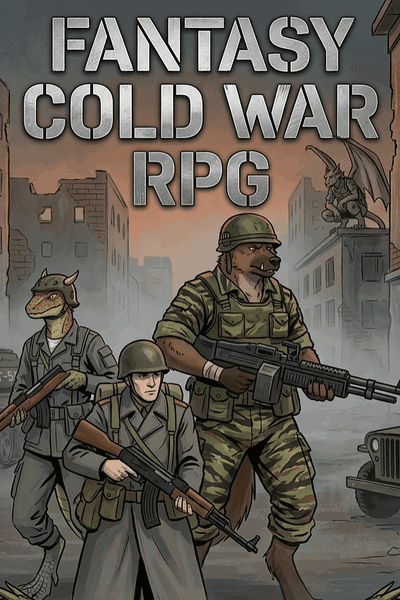
Fantasy Cold War RPG
Magic died fifty years ago. Now, everyone is willing to kill for its return.
by polycosmosinfintis · 1.3K tokens
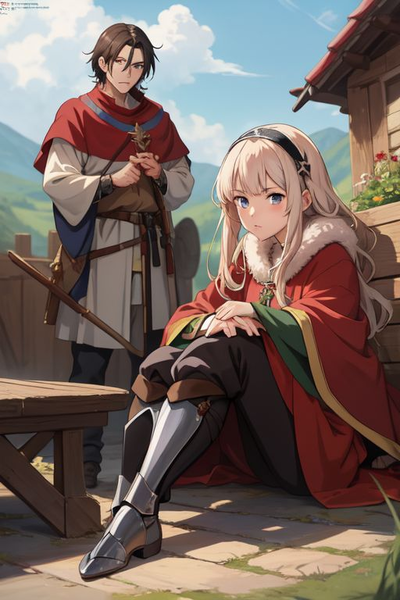
The Shattered Realms
Forge your destiny in a world on the brink of collapse—where every choice echoes through the ages.
by uchihaechinox · 1.2K tokens
Tank Convoy
All female tank convoy, injured, damaged, but still responsive and in operation, albeit, sustained heavy losses. Be a tank. Enemy or ally? Your move.
by korbanazuyo · 907 tokens
Summoned Country
Your whole country is getting isekaid, what country is it, what are your roles, and what will happen next?
by lazykukuk · 4.3K tokens
Arknights
Make your own story, or not, idk
by ygammay · 2.6K tokens
Noobs vs zombies RP
Welcome to First zombie vs zombies lore accurate RPG work in pogress
by themadsmanhouse · 2.6K tokens
Historical Trialmaker
Medieval simulator with real history and brutal realism.
by gladndh · 844 tokens
The Spy x Family RPG
Anime/manga RPG
by hossjolt · 898 tokens
attack on titan RPG
the attack on titan story you can make
by ramzi · 206 tokens
Ediolon Rebirth Mecha Fights
"One Frame. One Pilot. A New Era of War.
by uchihaechinox · 1.9K tokens
The US actually invades Greenland scenario
A theoretical future war scenario. US and European POV are added.
by qnsi · 971 tokens
RPG - Early Modern and Contemporary Ages
Modern and Contemporary Age
by angeluslikos · 3.1K tokens
North-South Korean War (2054)
I'll update this its just in beta
by loila · 701 tokens
Legend of The Galactic Heroes: Eight Battle of Iserlohn
UC 798, With Yang gone and the Empire advancing, the fate of Iserlohn Fortress rests in your hands alone. Command the Fortress and hold the line!
by gazpromemployee · 4.8K tokens

The Walking Dead - RPG
The Walking Dead RPG.
by angeluslikos · 3.1K tokens
turn till death
You play as a character in a tag-team style fighting game
by scarecr0w1nk · 1.7K tokens
Zoids — Planet Zi Warfront & Battle Circuit
Zoids, try not to die.
by mello0 · 1.0K tokens
Star wars the clone wars RPG
The clone Wars
by cyborggamer1997 · 4.2K tokens
Warhammer 40K, defend your ship from Tyranids
Put those Tyranids into a bloody grave
by acerdetective · 2.7K tokens

The Atomic Dogs
Furry RPG_
by hossjolt · 732 tokens

World RP (edited)
The world RPG. Do anything you want
by yuuji24411 · 689 tokens
Hybrid - Task Force 141
Open ended 141 hybrid scenario.
by mjzmzz · 252 tokens
Fate Grand Order - RPG
A Fate G.O. RPG
by emmelie3000 · 2.8K tokens
Pokémon: Team Rocket Simulator
Team Rocket RPG
by dunsparmy · 3.2K tokens
💬 Comments
Log in to join the discussion